Earlier this year, Isaac Brock brought roughly 2,400 of his enthusiasts aboard the maiden voyage of the Ice Cream Floats, a festival cruise during which his band Modest Mouse performed three sets across a four-day journey between Miami and the Dominican Republic. Brock, who was hesitant at first, wanted to route the ship from Seattle to Alaska, which synchronizes with the Pacific Northwest band’s songs about isolation— and he reluctantly agreed to tropical waters so that their “dumb rock music ”wouldn’t disrupt northern nature preserves. Three decades since Modest Mouse’s debut album and two since “Float On” launched them them to MTV stardom, a cruise might seem like a late-career Hail Mary—and a very bizarre match for Brock. As he tells it on An Eraser and a Maze, he, too, is trying to make sense of the state of Modest Mouse today through the lens of his own conflicting identities: a beloved outcast, a contentious hero, and an understated rebel who’s managing to mostly keep it together.

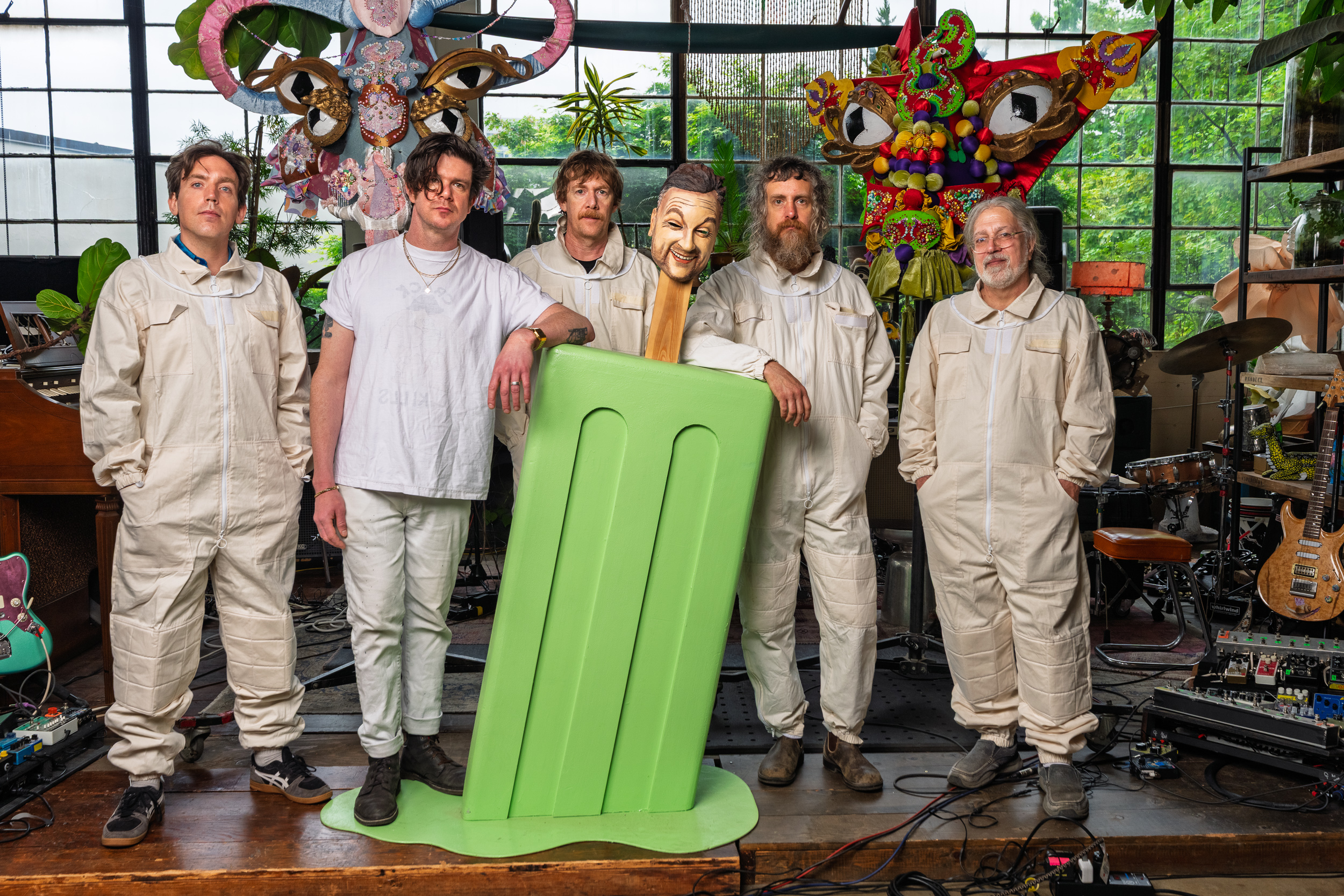
An Eraser and a Maze is the first Modest Mouse album since the passing of founding drummer Jeremiah Green. Trading the polished sound of 2021's The Golden Casket for an instinctive approach, frontman Isaac Brock allowed himself a "no-filter" creative process. The album, featuring touring drummer Damon Cox, also brings the indie legends back to Brock's own label, Glacial Pace. Brock says he went more instinctual when writing An Eraser and a Maze: “I just turned my filter off more and just let it all happen,” he explained in a press release.
Brock contemplates mortality on songs like the Somnolent acoustic ballad “Remember Yourself,” which offers a lot of advice you’ve heard before. On the hi-fi folktune “Dogbed in Heaven/Give It a Skeleton,” he ponders over his bucket list and how much he’ll be missed in death, but the main take home is that Brock’s tense, edgy voice still sounds just as powerful as it did on Good News for People Who Love Bad News. Producer Justin Raisen brings some haunted sleek, moody, and slightly cinematic sounds via “Rotten Fruit,” also stating: “Inside of every grave I know I’ve found a favorite friend.” Both the vocal feature and the overblown bass track feel disjointed, representing a strained attempt at novelty that ultimate functions as mere filler.
Often, An Eraser and a Maze leaves you wishing Modest Mouse had polished their unvarnished moments, especially as the forgettable backing tracks easily fade into the background.—a few exceptions are Janet Weiss ’kinetic drums on “Look How Far…” and Russell Higbee’s melodic bass that takes the forefront on the serene closer, “Impossible Somedays.” Brock almost gets there on the reverb-soaked “Third Side Of The Moon,” singing in what sounds like genuinely drunk mourning: “My heart pumped faster than could possibly beright/I read in a magazine the day before you only get so many thumps in your whole life.” Unlike his early-career reflections, Brock’s current outlook on his life is defined by a clear awareness of the lasting impact he will leave behind. —“Sooner than I hope, but I hope I’m wrong,” he clarifies.

On An Eraser and a Maze, Brock navigates the intricate relationship to rock stardom with these hazards in mind The album’s catchy, high-energy opener, “Picking Dragons ’Pockets,” could easily become Modest Mouse's first major radio hit of the decade. In it, Isaac Brock vents his frustration over the music industry commercializing his art: “Well they’ll go crazy if you don’t go crazy somehow/And I’m not crazy ‘bout what they’re so crazy ‘bout now,” he sings between mallet percussion riffs, wondering how many ill-fated anecdotes he has left into him to translate into song. “I can’t believe how long I’ve wanted to be living in the past,” he belts feverishly alongside the prodding guitar riffs of “Look How Far…,” offering fleeting yet vibrant proof that he can still channel his untamed drive. If the band intends to evoke nostalgia, they cleverly do so with a light touch, perfectly illustrated on the ramshackle jam of the mid-album highlight. “Speak ‘N Spell (Or Not).” Guitar riffs and group chants embellish Brock’s reflections on his perpetual trajectory, though he does seem to root them in gratitude for the process: “Life is fucking awesome and I know that it is/I know this because I’m living it” feels like some sort of positive evolution. Brock has spent his whole career in turbulent waters. Maybe he’s learned a thing or two about navigating them.